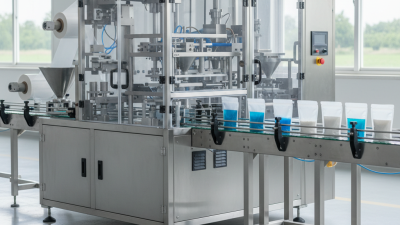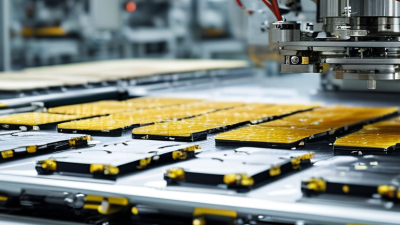
Choosing the right wrapping machine can shape production speed, product protection, and operating costs for years. Global buyers face many options, from compact stretch wrappers to automated systems for cartons, pallets, and irregular loads. Each machine may look impressive in a showroom. Real performance is often different.
This guide examines ten strong choices for international purchasing teams. It considers wrapping speed, film efficiency, load stability, control systems, maintenance access, and operator safety. It also looks at voltage compatibility, spare-parts availability, installation support, and supplier communication. These details matter when a machine is operating thousands of miles from its manufacturer.
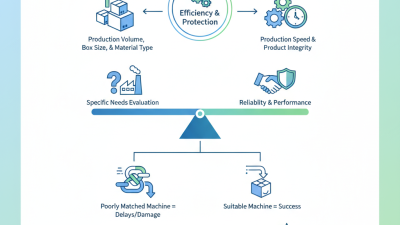
Field experience suggests that the cheapest quotation is rarely the cheapest solution. A poorly matched machine can waste film, slow dispatch, or create frequent service calls. Small details matter. A clear control panel helps during busy shifts. A strong turntable reduces movement around heavy pallets. Reliable sensors can prevent damaged packaging and unnecessary downtime.
However, no ranking can fit every factory. Product dimensions, output targets, labor skills, and local service conditions change the decision. Some supplier data may also require independent verification. Buyers should request factory videos, test samples, technical drawings, warranty terms, and total-cost estimates before ordering. We may overlook a promising regional manufacturer, too. That is why this selection should support careful comparison, not replace practical testing. The best wrapping machine is the one that performs consistently, remains serviceable, and matches the buyer’s real production environment.
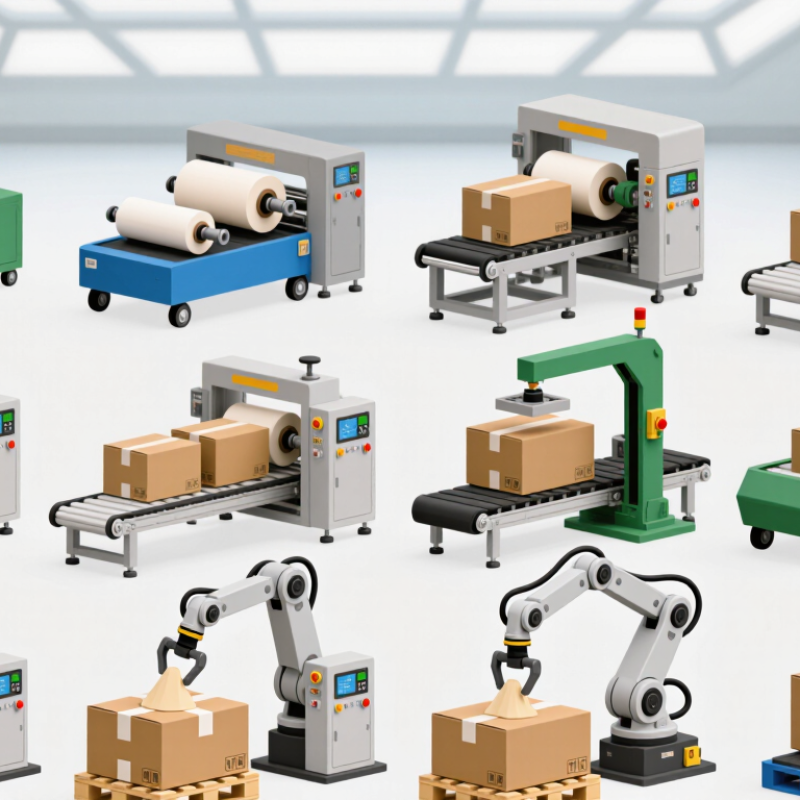
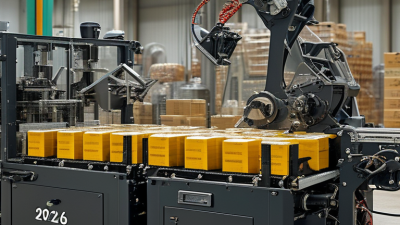
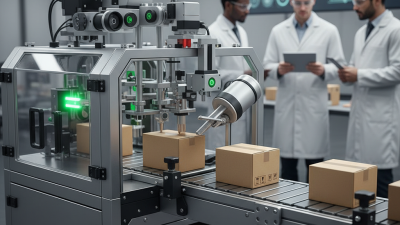
A wrapping machine places protective film around a product, bundle, or pallet. Its basic work is simple: feed, tension, wrap, seal, and cut. The difficult part is keeping each step stable at production speed. A conveyor positions the load, while rollers control film tension. A rotating arm or turntable then applies the film around the product. Sensors check height, position, and film breaks. Heat or mechanical devices complete the seal.
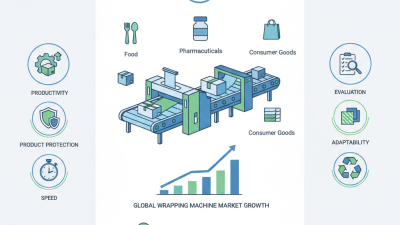
Different machines suit different packaging tasks. Stretch wrappers secure pallets with elastic film. Shrink wrappers loosely cover products, then use heat to tighten the film. Flow wrappers form a continuous film tube around items such as food packs or household goods. According to PMMI’s 2024 State of the Industry report, U.S. packaging machinery shipments exceeded 10 billion dollars in 2023. Smithers also valued the global packaging market at more than 1 trillion dollars in recent research. That scale explains the demand for faster, more measurable wrapping systems.
In real factories, performance is less perfect. Dust can affect sensors. Uneven cartons can change film tension. A machine rated for 40 packages per minute may run slower after changeovers. Buyers should test their actual products, film thickness, line speed, and floor space before purchasing. The Packaging Machinery Manufacturers Institute identifies automation, sustainability, and connected equipment as major industry directions. Yet data alone cannot fix poor training or weak maintenance. A practical trial often reveals more than a polished specification sheet.
Choosing among the 10 best wrapping machines depends on the product, not only the machine’s speed. Shape changes everything. Small boxes, cosmetics, and packaged foods often suit automatic film wrapping machines with adjustable sealing bars. They create neat, tight packages and maintain consistent film tension during long production runs.
Long products, such as timber pieces, metal profiles, and rolled materials, need horizontal flow wrapping or stretch wrapping equipment. These machines support continuous products without forcing them through a narrow vertical chamber.
Pallets, cartons, and irregular loads usually require rotary-arm or turntable stretch wrappers. Rotary-arm models work well when loads are unstable because the pallet stays still. Turntable models are often simpler for stable, evenly stacked goods.
For fragile items, choose equipment with gentle conveyors, soft pressure controls, and adjustable sealing temperatures. Heavy products require stronger frames and wider film carriages. I have seen operators select a machine by output rate, then struggle with film waste and damaged corners.
The advertised speed is not always the practical speed. Measure product dimensions, weight, surface texture, and daily volume before deciding. Measure twice. A trial with real products can reveal problems that brochures miss, especially loose film, weak seals, or poor corner protection.
When comparing wrapping machines for global purchasing, start with the load, not the machine’s advertised speed. Measure pallet height, width, weight, and surface stability. A machine should handle these variations without excessive film stretching or unstable rotation. Film compatibility also matters. Test common film widths, thicknesses, and recycled-content options before committing to a purchase.
Control over film tension is a practical feature. Too little tension creates loose corners, while excessive tension can crush cartons. Look for adjustable tension settings, reliable sensors, and automatic film cutting. A clear control panel helps operators change programs quickly. It should also record useful data, such as cycle counts and fault events. Simple is often better.
Global buyers should examine electrical requirements, guarding, emergency stops, and available technical documentation. Voltage and frequency differences can affect installation. Ask for wiring diagrams, spare-parts lists, training materials, and response times for remote support. These details often reveal the supplier’s real service capability. Not glamorous, but important.
In warehouse trials, watch the machine during repeated cycles, not just one demonstration. Listen for unusual vibration and check whether film breaks at the same point. A machine may perform well with perfect pallets but struggle with uneven loads. That weakness deserves attention. Buyers should also calculate total ownership cost, including film waste, maintenance, energy use, and operator training. A lower purchase price can become expensive when small failures interrupt daily production.
This comparison framework uses a practical 100-point weighting model for evaluating wrapping machines across international purchasing projects. Throughput and material efficiency receive the highest priority, while flexibility, safety, serviceability, and utility requirements help determine long-term suitability.
The percentages represent a neutral evaluation baseline rather than the performance of any specific manufacturer or brand. Actual priorities should be adjusted according to product size, packaging material, required output, local voltage, safety regulations, and after-sales support availability.
The ten strongest wrapping machines differ less by appearance than by control, load shape, and service access. Pallet stretch wrappers suit stable loads and reduce film waste through adjustable tension. Rotary-arm models handle tall or unstable pallets with less movement. Turntable machines cost less, but they need level loading and careful pallet placement. Shrink-wrapping systems create tighter protection around cartons, though heat settings require close monitoring.
For boxes, automatic case wrappers provide consistent sealing at high production speeds. Flow wrappers work well with small products and flexible film. Vacuum wrapping machines remove air before sealing, which helps protect selected food and industrial items. Orbital wrappers cover long products, such as profiles or furniture parts, without forcing them onto a turntable. Strapping-and-wrapping combinations improve load security, but they add maintenance points. In practical comparisons, output speed matters less than uptime, film consumption, and changeover time.
A reliable machine should offer guarded moving parts, clear controls, and accessible rollers. Ask for measured cycle data, not only catalog estimates. Noise and floor vibration can affect operators during long shifts. I have seen a fast wrapper lose its advantage because film breaks required frequent manual resets. That weakness is easy to miss. Energy use, spare-part availability, and technician response also separate a good purchase from an expensive interruption. Test several real load sizes before choosing; one machine rarely performs equally well across every product.
| Rank | Machine Type | Best Application | Typical Load Size | Typical Wrapping Speed | Film Compatibility | Automation Level | Typical Power Supply | Main Advantage | Key Limitation |
|---|---|---|---|---|---|---|---|---|---|
| 1 | Automatic Stretch Wrapping Machine with Turntable | High-volume palletizing | Up to 1,200 × 1,200 mm footprint Up to 2,000 mm height |
20–40 loads/hour | LLDPE stretch film, approximately 12–35 microns | Fully automatic | 220–240 V, three-phase; approximately 1.5–3 kW | Consistent wrapping tension and reduced labor requirements | Requires a stable pallet position and regular conveyor or forklift coordination |
| 2 | Semi-Automatic Turntable Stretch Wrapper | Warehouses and distributors | Up to 1,200 × 1,200 mm footprint Up to 2,000 mm height |
15–30 loads/hour | LLDPE stretch film, approximately 12–35 microns | Semi-automatic | 220–240 V, single- or three-phase; approximately 1–2 kW | Lower purchase cost with programmable wrapping cycles | An operator normally attaches the film and removes the finished load |
| 3 | Rotary-Arm Stretch Wrapper | Unstable or lightweight loads | Up to 1,200 × 1,200 mm footprint Up to 2,400 mm height |
25–60 loads/hour | LLDPE stretch film, approximately 12–35 microns | Automatic | 220–240 V or 380–415 V, three-phase; approximately 2–5 kW | The load remains stationary while the wrapping arm rotates around it | Needs more installation clearance than a basic turntable machine |
| 4 | Orbital Horizontal Stretch Wrapper | Long, flat, or irregular products | Product width up to approximately 1,500 mm Product height up to approximately 500 mm |
5–25 units/minute | Stretch film, PE film, paper, or protective film depending on the configuration | Semi-automatic to automatic | 220–240 V or 380–415 V; approximately 2–8 kW | Wraps profiles, furniture, doors, carpets, and similar products without palletizing | Not suitable for tall conventional pallet loads |
| 5 | Automatic Pallet Stretch Wrapper with Conveyor | Integrated production lines | Commonly 800–1,200 mm pallet width Up to 2,400 mm wrapping height |
30–80 loads/hour | Pre-stretched or power-stretched LLDPE film | Fully automatic | 380–415 V, three-phase; approximately 3–8 kW | Supports continuous, low-touch pallet packaging operations | Higher installation cost and more demanding line integration |
| 6 | Mobile Self-Propelled Stretch Wrapper | Mixed pallet sizes | Loads up to approximately 1,200 × 1,200 mm Wrapping height up to approximately 2,400 mm |
10–25 loads/hour | LLDPE stretch film, approximately 12–35 microns | Operator-guided automatic | Rechargeable battery system; typically 24 V | Can travel to different loads without a fixed turntable or conveyor | Battery charging and floor condition can affect operating efficiency |
| 7 | Ring-Type High-Speed Stretch Wrapper | Large distribution centers | Commonly 1,000–1,400 mm pallet width Up to 2,400 mm height |
50–120 loads/hour | Power-stretched LLDPE film, approximately 12–30 microns | Fully automatic | 380–415 V, three-phase; approximately 5–12 kW | High throughput with accurate film pre-stretch control | Higher capital cost and more specialized maintenance |
| 8 | Bale and Coil Stretch Wrapper | Textiles, insulation, and compressed goods | Product diameter or height commonly 400–1,800 mm | 3–15 units/minute | Stretch film, PE film, or reinforced protective film | Semi-automatic to automatic | 220–240 V or 380–415 V; approximately 2–10 kW | Handles cylindrical, compressed, or difficult-to-stack products | Usually requires product-specific tooling and loading arrangements |
| 9 | Shrink Wrapping Machine with Heat Tunnel | Retail multipacks and cartons | Package width commonly 200–1,200 mm Package height commonly 50–500 mm |
8–30 packs/minute | PE, POF, or PVC shrink film, commonly 9–100 microns | Semi-automatic to automatic | 220–240 V or 380–415 V; approximately 6–30 kW | Creates a tight, transparent package suitable for grouped products | Uses substantially more heat energy than stretch wrapping |
| 10 | Stretch Hood Packaging Machine | Weather-resistant pallet protection | Commonly 800–1,200 mm pallet width Up to approximately 2,500 mm height |
30–100 loads/hour | Stretch hood film, commonly 60–150 microns | Fully automatic | 380–415 V, three-phase; approximately 8–25 kW | Provides strong top and side protection against dust and moisture | Film and equipment costs are generally higher than standard pallet wrapping |
International buyers should match the machine to the product, film, factory, and destination. Start with product dimensions, weight, shape, and surface sensitivity. A bakery tray, spare part, and soft pouch need different handling. Measure actual output, not the number printed in a brochure. Ask for a live test using your own products and film. Record seal quality, wrapping tension, changeover time, and rejected packs. Small defects become costly across borders.
Electrical compatibility deserves careful checking. Confirm voltage, frequency, phase, plug design, and control-language options before ordering. Also inspect safety guards, emergency stops, and cleaning access. International buyers need more than a machine price. Add freight, customs charges, spare parts, installation, training, and yearly maintenance. Request a written parts list with realistic delivery times. Remote support sounds useful, but response hours matter during a production stoppage. Ask who will solve a sensor fault at midnight.
Supplier reliability should be tested through evidence. Review inspection documents, warranty terms, service procedures, and references from similar climates. Humidity, dust, and unstable power can change performance dramatically. Do not select the fastest model automatically. I once favored speed over changeover simplicity, and the decision created avoidable downtime. That mistake still matters. Choose controls your operators can learn, and leave room for future product sizes. Before payment, approve a sample run and document every agreed specification.