How to Choose the Right Robotic Packing Machine for Your Business?
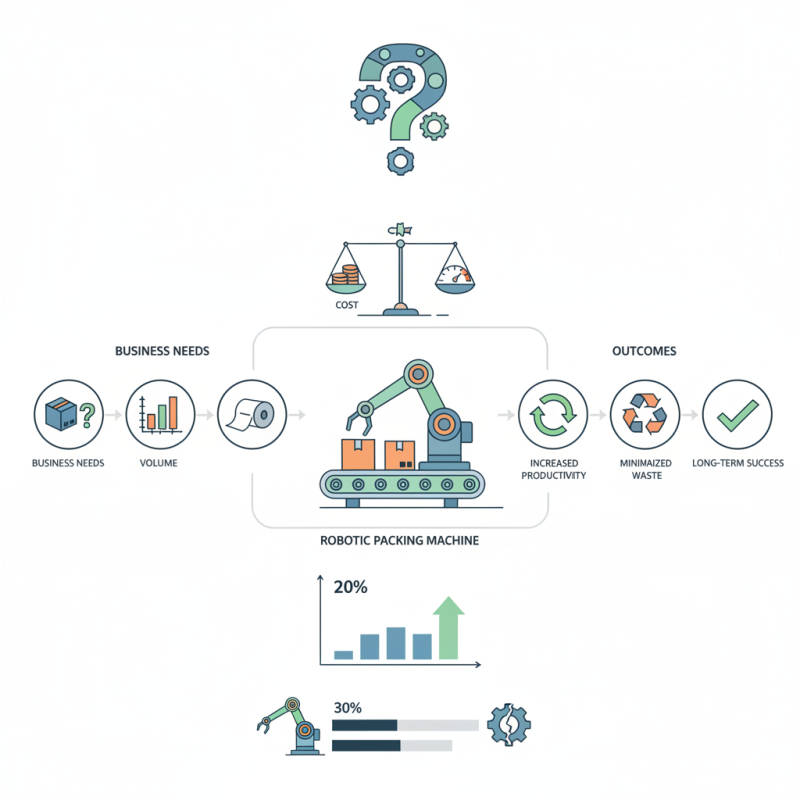
In today's fast-paced manufacturing landscape, the importance of efficiency cannot be overstated. A robotic packing machine is crucial for keeping up with demand. According to a recent industry report, businesses that invest in automation can see a productivity increase of 20% or more. This statistic underlines the significance of choosing the right equipment.
However, selecting the appropriate robotic packing machine is not a straightforward task. Various models exist, each designed for different applications. Some may cater to high-speed packing, while others excel in precision. Manufacturers often face challenges in balancing cost and performance. It is not uncommon for businesses to feel overwhelmed by the options available.
Consideration must be given to the specific needs of your operation. Factors such as product type, packaging material, and production volume are key. Furthermore, a wrongly chosen robotic packing machine can lead to inefficiencies. In a world where 30% of automation initiatives fail, careful evaluation is crucial. The right choice can improve productivity and minimize waste, ensuring long-term success.
Understanding Your Business Needs for Robotic Packing Machines
Understanding your business needs is crucial when choosing a robotic packing machine. An industry report by MarketsandMarkets highlights that the robotic packing market is expected to grow at a CAGR of 14.5% by 2026. However, investing in automation requires careful consideration of specific requirements.
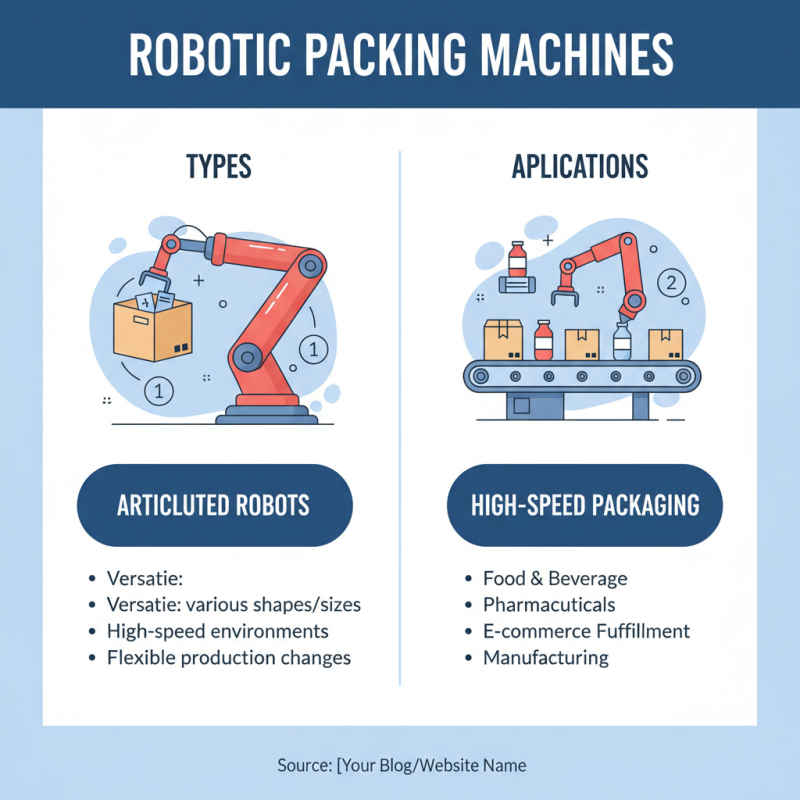
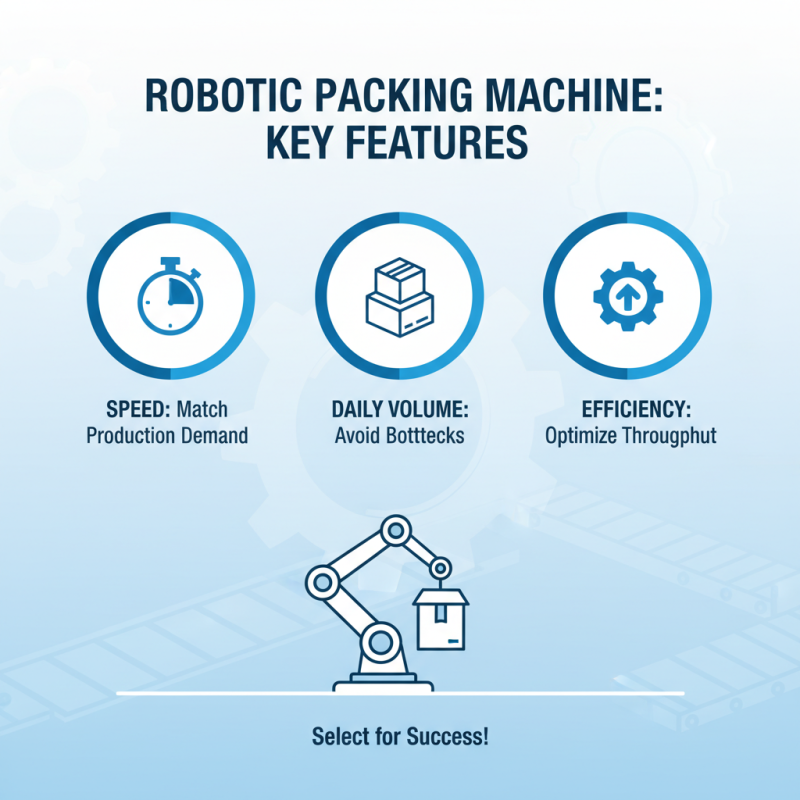
Evaluate your production volume and product types. Robotic packing machines excel in high-volume environments. If your business handles various shapes and sizes, flexibility in your choice is essential. Many machines offer adaptable settings, but not all can accommodate complex packaging solutions. It's crucial to identify what fits your production line without causing bottlenecks.
Consider the total cost of ownership. A low initial purchase price can be misleading. Maintenance, energy consumption, and integration with existing systems must be factored in. A study by the Association for Advancing Automation found that 50% of businesses underestimated ongoing costs. Reassessing these variables can prevent unexpected financial strain. Balancing cost and efficiency is key in your decision-making process.
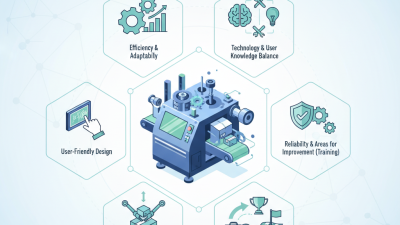
Understanding Robotic Packing Machine Efficiency
Types of Robotic Packing Machines and Their Applications
When selecting a robotic packing machine, understanding the types is crucial. There are several categories to consider. For instance, articulated robots are versatile. They can handle various shapes and sizes. These robots excel in high-speed environments, making them ideal for many applications. Their flexibility allows for quick changes in production lines.
Another type is delta robots. They are suited for picking and placing tasks. Delta robots operate at incredible speeds. This makes them perfect for packaging items like candies or small consumer goods. Their lightweight design also cuts down on energy consumption, which is essential for sustainable operations.
Consider also gantry robots, which offer a different approach. They can cover large areas and manage heavy payloads. However, their footprint is larger, which might not fit every facility. There are advantages and challenges with each type. Reflecting on these aspects can lead to better decisions when investing in robotic packing solutions. Balancing efficiency and space is vital in modern production.
Assessing Automation Levels for Your Packing Process
When assessing automation for your packing process, consider your workload and product variety. A recent industry report revealed that 70% of companies improved efficiency with automated packing systems. It's crucial to choose a machine that aligns with your specific needs. Customization options can enhance functionality. A one-size-fits-all approach often leads to inefficiencies.
Additionally, evaluate the integration capabilities with existing machinery. Seamless communication between systems can increase productivity. In some cases, automation can reduce labor costs by up to 30%. However, businesses must not overlook maintenance needs. Frequent breakdowns can disrupt operations and increase expenses.
A critical point is the learning curve associated with new machines. Staff may require training to operate complex systems. This transition can temporarily slow down production. Companies should plan for potential delays and allocate resources for proper training. Balancing these factors will help in selecting the right robotic packing machine for your business.
How to Choose the Right Robotic Packing Machine for Your Business? - Assessing Automation Levels for Your Packing Process
| Packing Process Type |
Automation Level |
Recommended Machine |
Key Features |
Estimated Cost |
| Flexible Packing |
Low |
Semi-Automatic Packing Machine |
User-friendly interface, easy to switch between products |
$5,000 - $10,000 |
| High-Volume Production |
High |
Fully Automatic Robotic Packing Line |
Fast speed, integrates with existing workflows, minimal labor |
$50,000 - $200,000 |
| E-commerce Fulfilment |
Medium |
Robotic Arm Packing Station |
Versatile, can handle various box sizes, improves packing accuracy |
$20,000 - $50,000 |
| Food & Beverage Packaging |
High |
Washdown Capable Robotic Packing Machine |
Hygienic design, compliant with food safety regulations |
$30,000 - $80,000 |
| Consumer Goods Packaging |
Medium |
Collaborative Robotic Packing System |
Safe operation alongside human workers, easy programming |
$15,000 - $50,000 |
Budgeting and ROI Considerations for Robotic Packing Solutions
When considering a robotic packing solution, budgeting is key. Assess the initial costs of the machine and installation. It’s crucial to account for ongoing expenses, like maintenance and training. Unexpected costs can arise. Not all machines are user-friendly, which can lead to increased labor costs.
Calculating the return on investment (ROI) helps measure potential gains. A robot may speed up packing operations significantly. This could mean fulfilling more orders in less time. However, how long will it take to reach breakeven? Analyzing your specific needs helps clarify this.
It’s also important to consider scalability. Business needs can evolve. Investing in a machine that is too specialized could limit future options. While a lower upfront cost might seem attractive, it might lack the flexibility required for growth. Balancing immediate savings with future potential is essential for long-term success.