10 Tips to Choose the Best Box Packaging Machine?

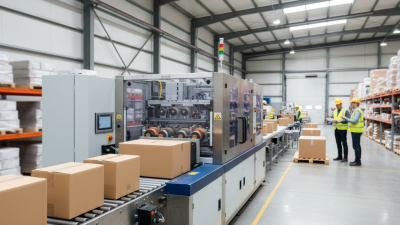
Choosing the right box packaging machine can influence production speed, product protection, and long-term operating costs. A machine that looks impressive at a trade show may perform poorly with your actual box sizes, materials, or staffing levels. Practical testing matters more than attractive specifications.

This guide presents ten useful tips for comparing packaging equipment with greater confidence. It examines sealing quality, changeover time, automation levels, operating speed, maintenance access, and energy use. It also considers whether the machine handles corrugated cartons, folding boxes, or customized packaging without frequent adjustments. Small details matter. A difficult control panel can slow an experienced operator. A poorly placed sensor can cause repeated stoppages.

Reliable decisions require more than online research. Ask manufacturers for production samples, service records, warranty terms, and realistic output data. Watch the machine run using your own boxes and products. Check noise levels, safety guards, spare-part availability, and cleaning procedures. These details often reveal more than a polished sales presentation.

There is no perfect choice.

A low-cost box packaging machine may reduce initial spending, yet create higher labor and maintenance expenses later. A fully automated model may be unnecessary for seasonal production. This is where careful judgment becomes important. Even experienced buyers can overlook future product changes or underestimate operator training. Reviewing those weaknesses openly can prevent expensive mistakes. With clear requirements, verified performance, and trustworthy technical support, businesses can select equipment that remains practical, safe, and dependable as production grows.
10 Tips to Choose the Best Box Packaging Machine?

Define Your Box Packaging Requirements and Production Goals

Choosing the best box packaging machine starts with defining your actual production requirements. Measure box length, width, height, and material thickness. Record the smallest and largest sizes. A machine designed for one carton range may struggle with frequent size changes. That creates waste and delays. It sounds obvious. Many purchasing errors begin here.

Tip 1: Calculate your real output goal. Measure average boxes per minute, peak orders, and planned growth. Do not use an ideal production number alone. My early estimates were too optimistic because I ignored loading pauses and material replacement. A realistic target should include those interruptions. Also check whether operators need manual feeding, automatic adjustment, sealing, labeling, or quality inspection. Each function affects speed, floor space, training, and maintenance.

Tip 2: Define packaging quality before comparing machines. Decide whether your boxes need tight folds, consistent tape placement, clean edges, or special protective handling. Test several samples using your actual board and products. Check crushed corners, loose seals, and misaligned flaps. A machine can meet its speed promise but still fail your quality standard. Ask for documented testing results, safety information, adjustment ranges, and service response times. These details are more reliable than promotional claims. Leave room for uncertainty. Product sizes, staffing, and order patterns may change, so flexible settings and accessible maintenance points can protect your investment.

Match Machine Types to Box Materials, Sizes, and Packaging Styles

Choosing a box packaging machine starts with the board, not the machine’s advertised speed. Smithers’ corrugated packaging report values the global market above $200 billion in 2024, with further growth expected through 2029. That scale increases pressure to automate, but material variation still causes failures. Test recycled, coated, and moisture-resistant boards before approving equipment. Recycled fibers can bend differently. A standard case erector suits regular slotted cartons, while a wraparound machine handles tighter product grouping and stronger side support.

Match the machine to box dimensions and packaging style. Folding cartons often require a folder-gluer with precise creasing control. Large corrugated cases may need servo-guided forming, compression belts, and adjustable sealing heads. Measure the smallest and largest box, not just the average one. Changeover time matters. PMMI’s 2024 industry report identifies labor pressure and automation investment as major packaging priorities, but automation becomes costly when format changes remain manual. Check tool-free adjustments, recipe storage, sensor access, and spare-part availability.

Speed figures can mislead. A line rated at 30 cases per minute may produce less after stoppages, misfeeds, and quality checks. Ask for tested output using your actual board and box styles. Include drop tests, seal checks, and compression measurements. I have seen buyers prioritize speed and overlook unstable blanks. That decision usually returns as waste. Sometimes, a slower machine is safer. A practical trial should record uptime, changeover minutes, reject rates, and operator interventions before purchase.

10 Tips to Choose the Best Box Packaging Machine

Match the machine type to the box material, size, and packaging style. Board thickness is a practical starting point when selecting forming, folding, gluing, taping, or sealing equipment.

Typical nominal thicknesses are approximately 0.5 mm for folding carton paperboard, 1.5 mm for E-flute corrugated board, 3.0 mm for B-flute, 4.0 mm for C-flute, and 7.0 mm for double-wall BC board. Actual thickness varies by paper grade and supplier. Thicker board generally requires stronger feeding, forming, compression, and sealing systems.

Evaluate Speed, Automation, Accuracy, and Production Capacity

10 Tips to Choose the Best Box Packaging Machine?

A box machine should match your actual production rhythm, not an impressive brochure. Measure hourly demand, changeover frequency, box sizes, and operator availability.

Tip 1: Compare verified output at your carton dimensions.
Tip 2: Check sustained speed, not the advertised peak. A machine rated at 40 boxes per minute may produce fewer during frequent adjustments.

Automation should reduce handling without creating a difficult system. The International Federation of Robotics reported 541,302 industrial robots were installed worldwide in 2023. This reflects growing automation, but not every factory needs robotic complexity.

Tip 3 Prioritize automatic feeding and size adjustment when labor varies.
Tip 4 Request a live demonstration using your materials. Sensors, recipe storage, and fault alerts can improve uptime. However, excessive automation may increase training and maintenance costs.

Accuracy protects product presentation and reduces waste.
Tip 5: Examine folding precision, glue placement, and sealing consistency.
Tip 6: Ask for documented rejection rates.

Production capacity also depends on reliability.
Tip 7: Review changeover time, service intervals, and spare-part access.
Tip 8: Calculate total output after downtime, not just machine speed.

Smithers projects the global packaging market will continue expanding through 2028, increasing pressure on flexible capacity.
Tip 9: Choose modular equipment for future formats.
Tip 10: Leave capacity headroom, but avoid buying unused speed. A bigger machine is not always wiser.

My practical concern is often overlooked: operators must understand the controls quickly, especially during a rushed shift.

Compare Machine Quality, Flexibility, Maintenance, and Safety Features

Choosing a box packaging machine requires more than checking its advertised speed. Machine quality appears in the details: a rigid frame, stable rollers, accurate sensors, and clean electrical wiring. During a factory test, run several box sizes and watch for uneven creases, slipping belts, or sudden stops. Small faults often become expensive production problems.

Flexibility matters when product dimensions change. Look for tool-free adjustments, clear setup scales, and short changeover times. The machine should handle your board thickness without excessive manual correction. However, flexibility can create complexity. I would question systems with too many settings and unclear controls. Simple operation is often safer for new operators.

Maintenance access deserves close attention. Open panels, labeled components, lubrication points, and readable service records reduce downtime. Ask how quickly common wear parts can be replaced. A supplier should provide training, technical documents, and realistic maintenance intervals. Safety features must include guarded moving parts, emergency stops, reliable interlocks, and clear lockout procedures. Test each feature, not just the demonstration button. Operators also need practical training, because a well-designed machine can still be used poorly. Higher speed is not always better. A slower machine with stable output, safer access, and fewer rejected boxes may deliver stronger results over time.

Assess Total Costs, Supplier Support, and Long-Term Value

10 Tips to Choose the Best Box Packaging Machine?

Assess Total Costs, Supplier Support, and Long-Term Value

A low purchase price can hide expensive ownership costs. Compare the machine, shipping, installation, training, and required utilities. Calculate labor savings using your actual box sizes and daily production volume. Small energy differences matter when the machine runs two shifts. Ask for maintenance schedules and average spare-part prices. Check whether common parts are locally available. Downtime costs more than many buyers expect.

Look beyond price. Request a written warranty with clear response times. Confirm who handles installation and operator training. Ask for service records from similar production environments, not only sales references. A practical test should use your own board grades, box dimensions, and target speed. Measure setup time, rejection rates, noise, and changeover effort. Numbers reveal weaknesses.

Supplier support affects long-term value. Check remote assistance, technician coverage, software updates, and preventive maintenance guidance. Clarify what happens after the warranty ends. Some suppliers promise fast help, but the contract stays vague. That deserves attention. I would also speak with current users about delayed parts or repeated faults. Their experience may be less polished, but more honest. Leave room for improvement, because forecasts are never perfect. A machine that fits next year’s workload may become restrictive later. Review upgrade options, safety features, operator access, and resale potential before approving the purchase.

10 Tips to Choose the Best Box Packaging Machine? - Assess Total Costs, Supplier Support, and Long-Term Value

No. Evaluation Area What to Check Recommended Data or Benchmark Cost Impact Long-Term Value Indicator Priority
1 Packaging Requirements Confirm box dimensions, board grades, flute types, closure styles, and required print or labeling functions. List the smallest and largest box sizes, material thickness, product weight, and daily production volume before requesting quotations. Prevents paying for unnecessary machine capacity or later purchasing additional equipment. A correct specification reduces changeover problems and protects future product compatibility. Critical
2 Required Throughput Compare rated speed with the actual speed achievable using your box size, material, operators, and quality standards. Request a production test using representative materials. Evaluate usable output, not only the maximum rated speed. A machine with excessive capacity can increase purchase and energy costs; insufficient capacity creates overtime or bottlenecks. Target capacity should cover forecast demand plus a practical growth allowance without routinely running at maximum speed. Critical
3 Total Cost of Ownership Include purchase price, installation, tooling, freight, utilities, maintenance, spare parts, labor, training, and disposal costs. Prepare a 5-year ownership model and compare annual cost per box or cost per thousand boxes. The initial purchase price is only one part of the investment; service and operating costs can materially change the result. Choose the option with the strongest lifecycle economics rather than the lowest quotation. Critical
4 Labor and Automation Level Assess feeding, forming, gluing, folding, packing, inspection, and palletizing requirements. Document operator tasks per shift, setup time, manual handling points, and the required skill level. Higher automation may raise capital cost but can reduce repetitive labor, handling errors, and overtime. Prioritize automation where labor availability, consistency, or safety is a continuing business risk. High
5 Changeover Flexibility Check recipe storage, tool adjustment, format change procedures, adjustment markings, and setup repeatability. Measure changeover time across at least three common box formats and record the number of manual adjustments. Shorter changeovers reduce idle time, material waste, and the cost of small production batches. Flexible equipment supports more product variations and reduces the need for separate dedicated lines. High
6 Quality and Material Waste Evaluate squareness, glue or seal consistency, compression quality, damage rates, and reject handling. Run a trial and record first-pass yield, rejected boxes, startup waste, and material consumed per accepted box. Poor forming or sealing increases board, adhesive, labor, and rework costs. Stable quality protects customer requirements and lowers hidden production losses. Critical
7 Energy and Utility Demand Review electrical load, compressed-air demand, vacuum requirements, heating systems, and standby consumption. Obtain power and air-consumption data at normal operating speed and calculate annual usage from actual shift hours. Utility costs increase with operating hours, local energy prices, and compressed-air inefficiency. Efficient drives, automatic standby modes, and leak-free pneumatic systems improve operating economics. Medium
8 Reliability and Maintainability Inspect access to wear parts, lubrication points, sensors, belts, tooling, guarding, and fault diagnostics. Request preventive-maintenance intervals, expected wear-part life, recommended spares, and documented downtime records where available. Unexpected downtime can cost more than routine maintenance through lost production and delayed shipments. Simple maintenance access and readily available wear parts support a longer productive service life. Critical
9 Supplier Support and Training Verify installation, commissioning, operator training, remote support, service response, documentation, and spare-parts logistics. Require written response times, warranty terms, training scope, service coverage, and parts availability for the expected equipment life. Weak support can extend downtime and increase travel, emergency repair, and retraining expenses. A capable support structure improves uptime, operator competence, and the return on the equipment investment. Critical
10 Safety, Compliance, and Future Expansion Check guarding, emergency stops, safety documentation, electrical compliance, layout requirements, and modular upgrade options. Confirm applicable local regulations and obtain a written list of available upgrades, interfaces, and maximum future capacity. Non-compliance may cause installation delays, redesign costs, penalties, or workplace incidents. A compliant, upgradeable platform reduces replacement risk as volumes, formats, and automation requirements grow. Critical
Recommended decision method: compare each machine using a weighted scorecard, then validate the result with a production trial and a five-year total-cost-of-ownership calculation.
Go to Top