How to Find Reliable HDPE Bottle Suppliers in 2026?
In 2026, finding a reliable hdpe bottle supplier takes more than comparing prices or browsing polished product photos. A bottle may look sturdy on a screen yet arrive with uneven walls, a loose cap fit, or inconsistent color. Those small defects can slow filling lines and create avoidable returns. Ask suppliers how they control resin batches, molding conditions, and inspection records. Specific answers matter.
Request samples that match your intended size, neck finish, color, and closure. Then test them with your product and filling process, checking for leaks, deformation, and fit after storage. Good suppliers can explain their production capacity, lead times, quality checks, and available material documentation without making vague promises. Verify claims against records and sample performance. Keep notes.
Price still matters, but the lowest quotation may exclude setup costs, packaging, or freight. Compare the full order scope and clarify how defects, schedule changes, and repeat orders are handled. Communication is evidence, too: timely, precise replies often make problems easier to resolve, though they cannot guarantee perfect production. I have seen buyers focus heavily on unit cost and overlook closure compatibility. It is an easy mistake, and not every checklist catches it. A careful supplier review helps you judge both the bottle and the working relationship before committing to a large order. Begin with clear specifications, measurable tests, and questions you can verify.
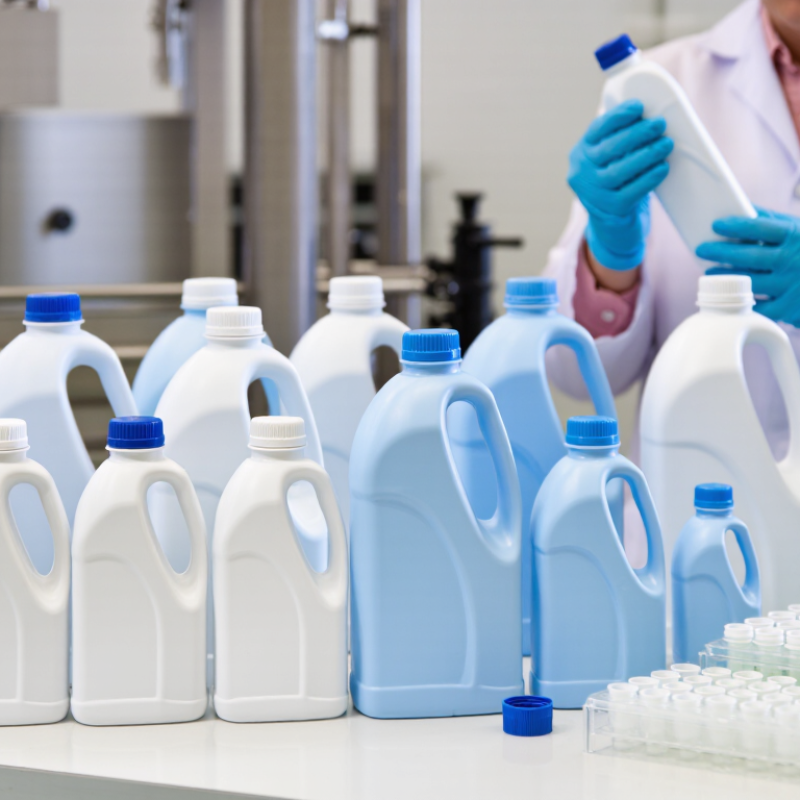
Define Your HDPE Bottle Specifications and Sourcing Requirements
Reliable sourcing starts with a clear bottle brief. Specify the resin grade, capacity, dimensions, neck finish, wall thickness, color, and closure type. A 500 ml bottle may still vary in grip, fill line, and label space. Share the product’s fill temperature and storage conditions, too, since these can affect material and design choices. Be precise, but leave room for discussion.
Tips: Send a marked-up drawing or physical sample when possible. List expected order quantities, annual demand, delivery location, and target schedule. Ask suppliers to explain their quality checks and provide relevant material or test documentation. Confirm who pays for samples and tooling.
Separate essential requirements from preferences. For example, a specific neck finish may be necessary for your filling line, while a custom color could be negotiable. Request sample bottles before approving production, then check dimensions, cap fit, leaks, and handling on your own equipment. Keep measurements and acceptance criteria in writing. Even a detailed brief can miss something; label adhesion or a slightly awkward grip may only become obvious during a real trial. Record those observations and revise the specification before placing a larger order.
Identify Suppliers with Relevant Manufacturing Capabilities
Finding reliable HDPE bottle suppliers in 2026 starts with matching their capabilities to your bottle, not just comparing prices. Ask which blow-molding processes they use and whether those lines suit your bottle’s neck finish, wall thickness, and order volume. Request recent samples and details about mold maintenance, changeovers, and production capacity. A polished sample is not enough. Check several bottles for weight variation, seam quality, cap fit, and leakage after a simple filled-bottle test.
Tips: Send a one-page specification covering capacity, dimensions, resin, color, closure, and forecast volume. Ask suppliers to confirm each item in writing. Check whether samples came from production tooling or a hand-finished trial. Small difference, useful clue.
Reliable suppliers should explain their quality checks clearly, from incoming resin checks to in-process measurements and batch records. Ask how they handle failed inspections, and request a redacted corrective-action example. Look for dates, measurements, and follow-up—not just “we check everything.” Discuss peak-season capacity, lead times, and how changes to resin or tooling are controlled. A site visit helps, but one good visit cannot prove every future order will match. I would leave room for doubt.
Verify Supplier Credentials, Quality Systems, and Compliance
Reliable HDPE bottle sourcing starts with evidence, not a polished brochure. Request the manufacturing-site address, business credentials, quality contact, and current ISO 9001 certificate. Verify its scope, site, and expiry with the certification body. ISO’s 2022 Survey recorded 1,265,216 valid ISO 9001 certificates across 189 countries. Certification is common, but it does not guarantee bottle performance. Ask for recent audit findings and corrective-action records. One awkward reality: a neat certificate can coexist with uneven production records.
Check documents against the bottle’s intended use and destination. Request the resin grade, batch certificate of analysis, change-control process, and relevant test reports. For samples, measure wall thickness and check cap fit, leakage, and drop performance with filled bottles. Keep the lot traceable.
OECD’s 2022 Global Plastics Outlook estimated that only 9% of plastic waste was ultimately recycled in 2019. If recycled HDPE is offered, request records showing its source and content; a claim on a specification sheet is not enough.
Compliance documents should match the product, use, and market—not just a supplier’s general assurances.
Evaluate Bottle Samples, Production Capacity, and Consistency
How to Find Reliable HDPE Bottle Suppliers in 2026?
Evaluate Bottle Samples, Production Capacity, and Consistency
A polished sample is a start, not proof. Test bottles from several production runs, checking weight, wall thickness, neck finish, cap fit, and leakage. Fill them with your actual product; then check for deformation after storage and transport simulation. The OECD’s Global Plastics Outlook reports that global plastics production rose from 234 million tonnes in 2000 to 460 million tonnes in 2019. That scale makes repeatable specifications essential, not optional. I still treat a perfect sample as only a starting point.
Ask suppliers for documented monthly capacity, current utilization, mold availability, and recent rejection rates. Compare those figures with your forecast, including peak demand. During an audit, watch a line changeover and inspect how operators record weight and dimensions. Ask for quality records from multiple batches, not a single showcase run. Small variations can matter: a slightly different neck finish may cause cap leaks, even when the bottle looks identical. Supplier explanations should be specific and supported by records.
Tips: Request samples from three separate runs. Record dimensions and filled-bottle weights, then repeat the checks after delivery. Keep a signed reference sample, but review batch data regularly; paperwork can look reassuring while production drifts.
How to Find Reliable HDPE Bottle Suppliers in 2026?
Evaluate Bottle Samples, Production Capacity, and Consistency
How to use this chart: This suggested scoring framework prioritizes sample conformity, production capacity, batch consistency, and quality documentation. It is a practical checklist, not a survey of supplier performance. Verify sample dimensions and specifications, confirm capacity against your order schedule, and review quality records across multiple production batches.
Compare Pricing, Lead Times, and Contract Terms Before Selection
How to Find Reliable HDPE Bottle Suppliers in 2026?
Compare Pricing, Lead Times, and Contract Terms Before Selection
When comparing HDPE bottle suppliers in 2026, look beyond unit price. A low quote may exclude mold fees, color changes, label application, or freight. Request a like-for-like quotation for the same bottle weight, neck finish, closure, order quantity, and packaging method. Check whether prices are fixed or subject to resin-cost changes. No quote tells the whole story. Calculate landed cost per usable bottle, including inspection expenses and potential rejects.
Lead times need equally careful checking. Ask for separate estimates for sample approval, tooling, production, and shipping. Request recent on-time delivery figures and a written production schedule, not only a sales estimate. Confirm how the supplier handles shortages, delays, and quality defects. Contract terms should state tolerances, acceptance criteria, payment milestones, change approvals, and remedies for missed dates. A spreadsheet helps, but it can miss a late change in resin availability. Verify assumptions directly.
Tips: Ask two shortlisted suppliers to quote against one specification sheet. Keep approved samples and inspection records. Before signing, ask the supplier to explain a realistic delay scenario and its effect on delivery dates and costs. Keep records. If an answer stays vague, pause and clarify it in writing.
How to Find Reliable HDPE Bottle Suppliers in 2026? - Compare Pricing, Lead Times, and Contract Terms Before Selection
Indicative comparison for empty 500 mL HDPE bottles in standard commercial production. Price ranges are planning benchmarks, not supplier quotations; actual costs depend on bottle weight, resin grade, cap, color, decoration, order quantity, and delivery terms. Prices exclude freight, duties, and taxes.
| Supplier / Order Profile | Indicative Unit Price (USD) | Typical MOQ | Sample & Production Lead Time | Common Payment Terms | Contract Points to Confirm | Best Fit |
Stock bottle, standard finish
Existing mold; standard natural or white bottle and compatible stock closure | $0.08–$0.18 per bottle | About 5,000–20,000 units | Samples: 3–10 business days
Production: 2–4 weeks | Often 30% deposit; balance before dispatch or against agreed shipping documents | Confirm bottle weight, neck finish, closure fit, tolerances, packing method, and defect acceptance criteria. | Lower-volume orders, standard packaging, and faster replenishment |
Existing mold with custom color or closure
Standard bottle geometry with a requested color, cap, or simple decoration | $0.10–$0.25 per bottle | About 10,000–30,000 units | Samples: 1–3 weeks
Production: 3–6 weeks after approval | Commonly 30% deposit and 70% before shipment; negotiate against inspection and shipping milestones. | Specify color standard, approved sample, decoration durability, change-control process, and responsibility for rejected lots. | Buyers needing brand-specific appearance without funding a new mold |
New custom bottle mold
Custom shape or dimensions; new tooling and sample approval required | About $0.12–$0.30 per bottle, plus tooling
Tooling may be roughly $1,500–$8,000 or more | About 20,000–50,000 units; varies by design and production setup | Tooling and samples: 4–8 weeks
First production: commonly 8–14 weeks total | Tooling deposit and staged production payments are common; tie later payments to approved samples or inspection where possible. | State mold ownership, storage, maintenance, permitted use, transfer rights, revision costs, and delivery of tooling files. | Stable, higher-volume demand that justifies unique packaging |
Before selection, request a written quotation using the same bottle drawing, resin specification, order quantity, closure, packing standard, and delivery term. Verify production capacity, sample consistency, quality records, applicable food-contact or chemical-compliance documentation, inspection arrangements, and the contract’s remedies for late delivery or nonconforming goods.