Choosing a chip bagging machine in 2026 is no longer a simple capacity decision. Snack producers now balance speed, seal integrity, labor availability, energy use, and packaging waste. A machine that fills 120 bags per minute may still underperform if changeovers are slow or seasoning dust affects the seals. The details matter.
PMMI’s 2024 State of the Industry report valued U.S. packaging machinery shipments at approximately $11.3 billion in 2023, representing 5.8% growth. Its findings also highlight continued investment in automation, digital monitoring, and flexible production systems. Meanwhile, market research from Mordor Intelligence indicates steady growth in the global potato chips market, increasing pressure on manufacturers to improve throughput without sacrificing consistency. These figures suggest strong demand, but they do not identify the right machine for every factory.
Jorge Izquierdo, Vice President of Market Development at PMMI, has expressed a practical principle: “Automation must solve a real production problem, not simply add technology.” That warning deserves attention. A high-speed chip bagging machine can reduce manual handling, but it may create unnecessary complexity for a small operation with frequent product changes. Buyers should examine actual bag sizes, target weights, nitrogen-flushing needs, film behavior, cleaning routines, and available technical support. This guide compares those factors through an operational lens. It cannot promise one perfect answer. Production conditions differ, and even reliable specifications can look less impressive beside a dusty conveyor at midnight.
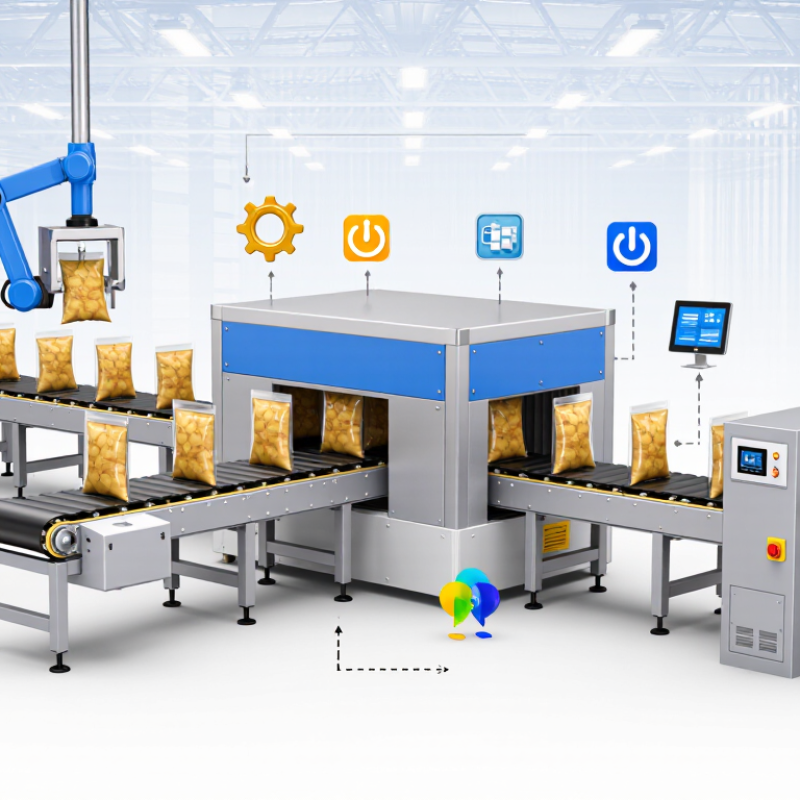
A chip bagging machine turns a steady stream of snacks into measured, sealed packs. In a typical line, chips travel from a product feeder into a weighing system. The scale releases a target portion into a forming tube, where packaging film becomes a bag. A sealing unit closes the bottom, fills the bag, then seals the top. The finished pack is cut free. Timing matters: chips are fragile, and a rough drop or uneven feed can mean broken pieces or inconsistent fills. The process looks simple from outside. It isn’t always.
To choose a suitable machine, match its weighing range and speed to your actual product and pack size. Check how quickly operators can change film rolls and clean product-contact parts. Ask for a trial using your chips and packaging material; oily seasoning, irregular shapes, and static can affect feeding and sealing. Review seal quality, giveaway rates, and downtime—not just the quoted bags per minute. A fast machine may be a poor fit if it often stops for adjustments.
Tips: Watch a full production run, not just a short demonstration. Inspect seals for wrinkles, and check whether chips collect around the scale. Record results across several pack sizes. Small details matter. Leave room for uncertainty, too: product behavior can change with temperature, humidity, or a new recipe.
Before comparing speeds or prices, define the bag your product actually needs. Measure its width, length, and fill weight, then check whether the machine supports pillow bags, gusseted bags, or another required format. A sample bag helps reveal practical issues. Does it stand well on a shelf? Can operators open it without crushing the chips?
Protect the product. Chips break easily when dropped or compressed, so review the filling path, drop height, and handling points. Ask for a trial using your own chips, not just a substitute. Watch the product enter the bag and inspect the finished packs for breakage, uneven fills, and crumbs trapped in the seal. Small details matter. A weak seal can let air or moisture affect crispness, even when the bag looks fine.
Match output to real production needs, including peak demand and planned shifts. Check weighing accuracy, film compatibility, changeover time, cleaning access, and how the machine connects with upstream equipment. Operators should be able to clear jams and adjust settings safely. It is easy to overestimate future speed; I would rather see a stable run at the required rate than a specification that looks impressive on paper. Ask what routine maintenance involves, and whether common wear parts are easy to inspect and replace.
What Types of Chip Bagging Machines Are Available?
Vertical form-fill-seal machines make bags from a roll of film, fill them, and seal them in one continuous process. They suit high-volume lines with consistent bag sizes. For fragile chips, gentle product handling matters: sharp drops can create crumbs before the package reaches the case. A multihead weigher is often paired with this machine to portion irregular pieces quickly. Still, faster is not always better.
Premade-pouch machines fill and seal bags that are already formed. They can handle stand-up or resealable pouches, and changeovers may be simpler when a facility sells several package styles. The trade-off is that preformed bags can take more storage space and may cost more per package. Check how the machine supports each pouch at the filling point; a bag that slumps can slow the line.
Some operations use semi-automatic weigh-and-fill equipment, where an operator positions bags and starts each fill. This can fit small batches or seasonal production, though it requires more hands-on work. Choose the machine type around output, bag format, chip fragility, and available floor space. Ask for a product trial using your actual chips and film. I would not rely on a brochure speed alone; real products behave differently, and that detail is easy to overlook.
Compare common bag formats by the number of seal lines typically created during filling. This is a packaging-structure comparison, not a machine-speed or performance ranking.
A vertical form-fill-seal machine commonly makes pillow bags; quad-seal bags require additional longitudinal seals. Premade pouches arrive with their side and bottom seams already formed, so filling equipment typically makes the top closure. Confirm bag construction and required options with the machine supplier.
How to Compare Machine Features, Capacity, and Total Cost
Start with the bag you actually sell. Measure its width, length, seal area, and target fill weight. Then test your chips on the machine: fragile curls and dense kettle chips can behave differently in a vibrating feeder. Ask for sustained output with your product, not just the maximum speed on a specification sheet. PMMI’s 2024 State of the Industry report put U.S. packaging machinery shipments at about $10.9 billion in 2023. That figure shows a substantial equipment market, but it does not tell you whether a particular line will meet your shift target.
Compare usable capacity, changeover time, cleaning access, and rejected-bag rates. A machine rated for 60 bags per minute may deliver less after stops, refills, and film adjustments. Get a timed trial. Watch whether an operator can clear a jam without reaching awkwardly around hot sealing jaws. Small details matter. PMMI’s 2024 report also tracks labor and operating pressures across packaging, making ease of operation worth evaluating alongside speed.
Request a written estimate covering the machine, feeder, installation, training, spare parts, and expected maintenance. Calculate cost per accepted bag across your planned shifts. Include film waste and downtime, not just the purchase price. One estimate may still miss something; verify assumptions with your production team before comparing offers.
Before signing off, run a factory acceptance test with your actual chips, film, and target bag sizes. Check weight variation, seal strength, rejected bags, and bags per minute over a sustained run—not just a brief demonstration. Small details matter. Record results, then repeat the test after installation. FAO’s 2019 State of Food and Agriculture report estimated that 14% of food is lost between post-harvest and retail. That figure is not specific to snack packaging, but it shows why product protection and process control deserve attention.
At the plant, confirm floor space, power, compressed air, extraction needs, and safe access for cleaning. Ask the supplier to document utility connections and operator training. Verify guards, emergency stops, and interlocks before production; have qualified personnel complete electrical and mechanical checks. Test several film rolls and product lots, since humidity, oil, and seasoning can affect seal quality.
Not on paper. On your line.
Set maintenance intervals using the manual and your own operating records. Inspect sealing jaws for residue, worn surfaces, and uneven pressure; check belts, sensors, and weighing components on a scheduled basis. Keep a log of faults, downtime, and spare-part use. A perfect first shift can mislead. Review performance after a few weeks, then adjust cleaning and inspection intervals based on evidence, not habit.