How to Choose the Right Packaging Equipment?
Choosing the right packaging equipment is less about buying the fastest machine and more about matching equipment to the product, process, and people who will run it. A filler that handles thin liquids may struggle with a thick sauce. A compact labeler can save floor space, yet leave little room for maintenance. Details matter. Manufacturing quality expert W. Edwards Deming offered a useful reminder: “Quality comes not from inspection, but from improvement of the production process.” Applied to packaging, that means evaluating how a machine fits the full line—not just its advertised speed.
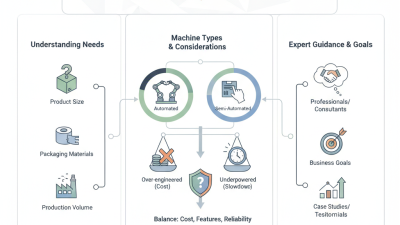
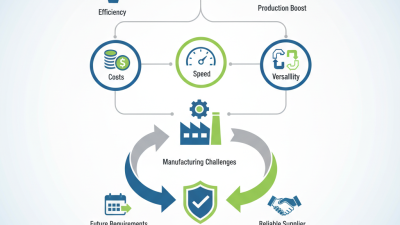
Start with the package itself: its material, size, shape, and sealing requirements. Then consider actual production volume, changeover frequency, available space, and operator experience. Ask suppliers about cleaning, spare parts, training, and service response. Request a demonstration using your own product and packaging, if possible. A polished demo with sample materials can hide awkward changeovers. That is worth questioning. The best packaging equipment should meet today’s needs without making routine adjustments, maintenance, or future growth unnecessarily difficult. This guide explores key machine types, essential selection criteria, automation trade-offs, and questions to ask before purchasing. There is no perfect fit for every plant. The practical choice is the one your team can operate reliably, maintain safely, and justify with clear production needs.
Define Required Throughput by Matching Rated Speed to Peak Production Demand
Rated speed is a starting point, not a production plan. Calculate your busiest realistic hour, then compare it with the machine’s rated output. If peak demand is 18,000 bottles per hour, a line running at that exact rate has no room for stops, changeovers, or rejects. At 85% effective running time, you would need a rated speed of about 21,200 bottles per hour to meet that demand. Outages happen.
Use actual shift records where possible. Include short stoppages, product changes, cleaning, and the time operators need to refill packaging materials. A machine may reach its advertised speed with one container format, then slow noticeably with another. Test your format. Ask suppliers to demonstrate the intended package, closure, and label—not a convenient substitute. Leave headroom, but do not buy capacity your upstream or downstream equipment cannot use.
Labor availability also affects achievable output. Deloitte and The Manufacturing Institute’s 2024 talent study projects that 3.8 million manufacturing jobs may be needed by 2033, with 1.9 million potentially unfilled. That is a reason to examine staffing assumptions, not to treat a report forecast as your plant’s schedule. Record who clears jams and how long restarts take. Then compare the machine’s rated speed with your peak demand under those real operating conditions. A small caveat: past downtime is useful, but it may not predict a new product launch.
Calculate OEE: Availability × Performance × Quality; 85% Is a Common Benchmark
When comparing packaging equipment, look beyond its quoted speed. Overall Equipment Effectiveness (OEE) shows how much planned production time becomes good output. Calculate it as Availability × Performance × Quality, using each factor as a percentage. For example, 90% availability × 95% performance × 99% quality gives an OEE of about 84.6%. That is near the commonly cited 85% benchmark, not a guarantee of suitability.
Availability falls when a line stops for changeovers, jams, or maintenance.
Performance measures actual output against the machine’s rated speed, while Quality tracks acceptable packs against total production.
Keep the measurements consistent. A short trial using your own containers, seals, and product can reveal issues that a brochure misses. Watch the line during a full shift, not just a smooth ten-minute demonstration.
Treat 85% as a reference point, not a pass-or-fail rule. A new line may score lower during training, and a high score can still hide awkward changeovers or excessive operator effort. OEE also simplifies reality; product mix and planned breaks can distort comparisons if teams record them differently. Be precise, but question the number. A practical equipment choice should fit the real workload and leave room for improvement.
Verify Product, Package, Changeover, and Sanitation Compatibility
Choosing packaging equipment starts with the product, not the machine brochure. A dry powder, sticky sauce, and fragile snack behave differently at the filler, transfer point, and sealing jaws. Check viscosity, particle size, temperature, and whether the product foams or sheds crumbs. Details matter. A sauce that looks pourable in a sample cup may still cling to a hopper wall during a long run.
Match the package format and materials to the equipment’s forming, filling, and sealing range. Confirm actual dimensions, film stiffness, closure style, and target fill weight using production samples, not drawings alone. Test it live. Run a trial at realistic line speed and watch for wrinkled seals, product trapped in the seal area, or containers tipping on the conveyor. These are useful warnings, not merely cosmetic issues.
Changeover time and sanitation deserve equal attention. If operators switch sizes each shift, review adjustment points, recipe controls, and access to product-contact surfaces. Inspect guards, frames, and hollow areas where residue can collect; a fast wash is not automatically a complete wash. Verify cleaning steps against the product and site procedures, then time a full changeover with the crew. Early estimates can be optimistic. Leave room for awkward fittings or a missed adjustment, and record what the trial reveals before approving the equipment.
How to Choose the Right Packaging Equipment?
Verify product, package, changeover, and sanitation compatibility before selecting a machine.
How to read this chart: These are selection gates, not survey results. Confirm every category against your product, package specifications, production requirements, and cleaning procedures before purchase.
Compare Total Cost of Ownership, Including Labor, Utilities, and Downtime
When comparing packaging equipment, look beyond the purchase price. Estimate total cost of ownership over the machine’s working life: labor, electricity, compressed air, maintenance, spare parts, and lost production. The U.S. Department of Energy’s guide, Improving Compressed Air System Performance, notes that compressed air can account for about 10% of electricity use in industrial facilities. A pneumatic machine may therefore cost more to run than its quote suggests. Check actual utility rates and request energy-use figures under realistic operating conditions.
Labor costs need equal scrutiny. Count the time operators spend loading materials, clearing jams, cleaning, and changing formats. Then compare those hours with the equipment’s staffing requirements. Downtime bites. Use shift logs to record stoppages and their causes; a small jam repeated every hour can erase the savings from faster nominal output. The spreadsheet will still miss something, so validate assumptions with operators before choosing.
Tips: Ask suppliers for changeover and maintenance times, not just maximum speed. Model low, expected, and high production volumes. Include training and spare-part lead times. A cheaper machine can win—but only if it performs reliably on your actual line.