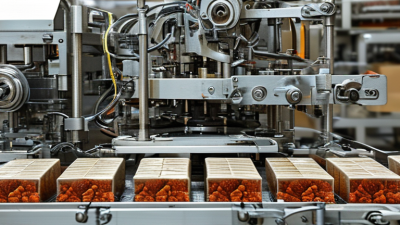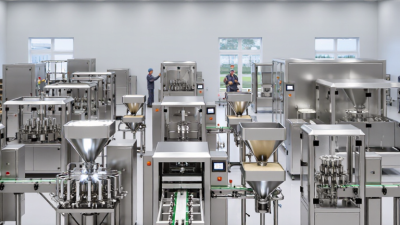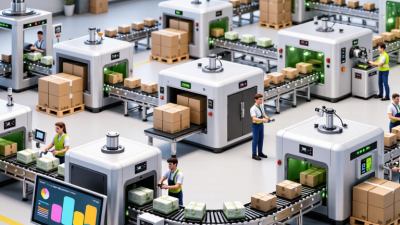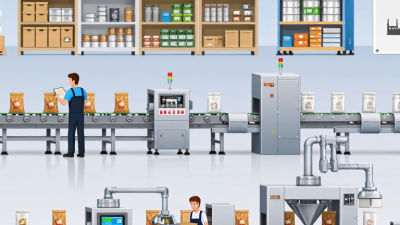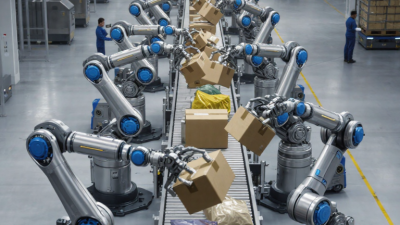
Global packaging lines are becoming faster, more connected, and less dependent on manual intervention. The automated packaging machine now supports filling, weighing, sealing, labeling, case packing, and palletizing across many industries. PMMI’s State of the Industry research reported that U.S. packaging machinery shipments reached approximately $10.2 billion in 2022. More recent market studies also predict steady global growth, although their figures vary by machine scope and regional coverage.
That difference matters to global buyers. A small pouch line and a high-speed beverage line require very different automation strategies. Mordor Intelligence estimates that the packaging machinery market will continue expanding through 2029, driven by e-commerce, labor shortages, food safety expectations, and flexible production. These pressures are visible on factory floors: operators adjust touchscreen recipes, robotic arms place cartons, and sensors reject damaged seals within seconds.
This guide examines ten major automated packaging machine types and the buying factors behind them. It considers speed, changeover time, product protection, energy use, maintenance access, and integration with existing equipment. Compliance also deserves attention, including electrical safety, hygienic design, traceability, and regional certification requirements. No machine wins every line. A fast filler may waste materials when products vary in size, while a cheaper cartoner may demand more manual adjustment. Buyers should question headline capacity figures and test real products before signing contracts. Industry reports offer useful direction, not certainty. The strongest decision combines supplier experience, verified trials, lifecycle costs, and the practical realities of each production site.
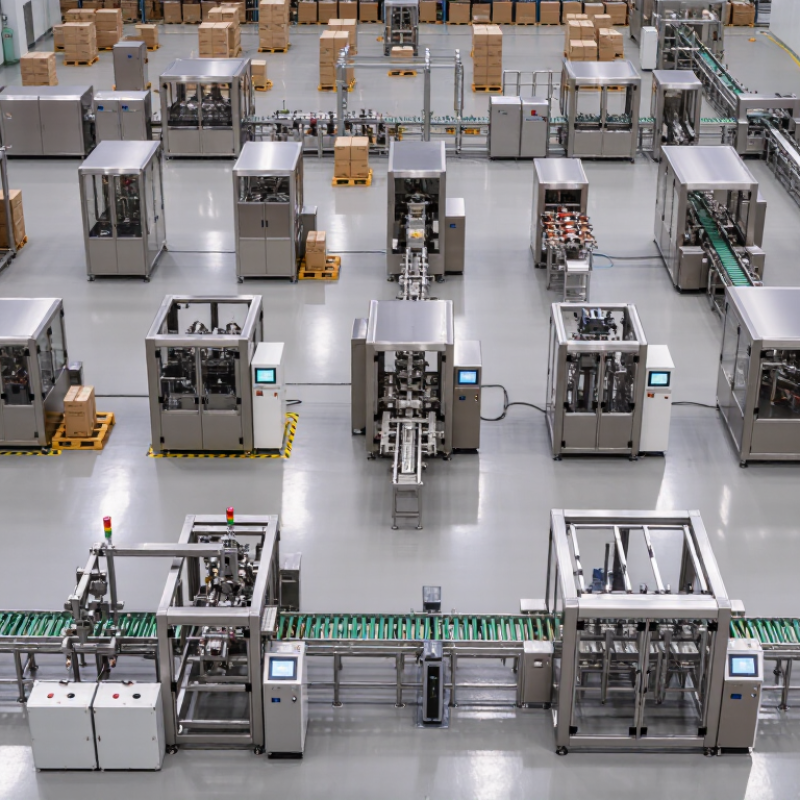
Automated packaging machines are best compared by packaging stage and product handling needs. The ten leading types include form-fill-seal, filling, vacuum packaging, blister packaging, cartoning, case packing, labeling, coding and marking, palletizing, and stretch wrapping machines. Each type solves a different problem, from sealing small pouches to stabilizing loaded pallets.
According to IMARC’s 2024–2030 market outlook, automated packaging demand is expected to expand as manufacturers pursue higher output, consistent quality, and lower labor dependency. Growth should remain strong in food, beverages, pharmaceuticals, personal care, and online retail. Form-fill-seal and filling equipment may benefit from flexible product formats. Case packing and palletizing should gain attention in high-volume warehouses. Labeling, coding, and inspection-ready systems will also matter as traceability requirements become stricter.
Machine selection still requires practical experience. A fast filler can create costly waste if the product foams or varies in density. A compact cartoner may struggle with unstable cartons. Buyers should examine changeover time, cleaning access, safety controls, spare parts, and operator training. Integration with weighing, vision, and warehouse systems can improve reliability, but it also increases commissioning demands. Forecasts are useful, not perfect. Regional energy costs, packaging-material rules, and supply-chain disruptions may alter the 2024–2030 growth path. A short factory trial often reveals more than a polished specification sheet.
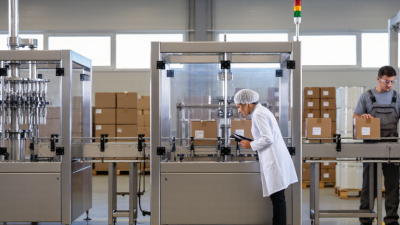
Primary packaging machines must match the product, film, pack size, and required output. For global buyers, VFFS, HFFS, pouch, and sachet systems commonly operate between 30 and 200 ppm. The correct choice depends on more than speed.
VFFS machines form bags vertically from a continuous film roll. They suit powders, granules, snacks, and other free-flowing products. Auger fillers improve powder accuracy, while multihead weighers support varied solid products.
HFFS systems create packs horizontally and can handle delicate items, shaped products, and liquid or semi-liquid fillings. Their servo-driven jaws help control cutting and sealing positions.
Pouch systems offer flexible formats, including stand-up and three-side-seal bags. Sachet machines support compact single-use packs, often with four-side seals. At higher speeds, film tracking and seal temperature become critical. Small changes in humidity can affect powder flow and seal cleanliness. Speed is not everything. In factory trials, I have seen a 150 ppm target reduced by weak seals and frequent film adjustments. Buyers should test the actual product, not only an empty package. Check fill accuracy, seal strength, dust control, changeover time, and operator access. A machine that runs smoothly at 80 ppm may deliver better usable output than one rated for 200 ppm. That difference deserves careful review.
Secondary packaging turns filled products into stable, shippable units. Cartoners, case packers, and tray formers commonly operate between 20 and 80 cycles per minute. At this range, infeed spacing matters as much as machine speed. A small timing error can create carton jams, crushed cases, or empty trays. PMMI reported that U.S. packaging machinery shipments reached approximately $10.9 billion in 2023, showing continued investment in automated packaging systems.
Cartoners suit retail cartons, multipacks, and instruction inserts. Case packers handle heavier loads and reduce repetitive lifting near the end of the line. Tray formers provide open displays for warehouses and retail shelves. Buyers should compare changeover time, format memory, servo control, and tool-free adjustments. A machine rated at 80 cycles per minute may deliver less in production. Product variation, film tension, and operator intervention often reduce real output.
Interpack’s 2023 processing and packaging survey identified efficiency, labor availability, and sustainability as major investment drivers. These pressures make compact secondary packaging equipment attractive, especially for mixed product formats. However, automation is not automatically economical. I have seen specifications hide cleaning delays and difficult access points. Request a factory acceptance test using actual cartons, cases, and trays. Measure sustained output, waste, changeover minutes, and recovery after minor stoppages. Performance evidence matters more than a headline speed.
| Rank | Machine Type | Typical Rate | Primary Pack Format | Common Product Applications | Typical Changeover | Key Buyer Consideration |
|---|---|---|---|---|---|---|
| 1 | Horizontal Intermittent-Motion Cartoner | 20–60 cartons/min | Pre-glued or flat cartons with side or end closure | Folding cartons, pouches, sachets, bottles and tubes | 20–45 minutes for standard size changes | A practical choice for mixed products and moderate production volumes |
| 2 | Horizontal Continuous-Motion Cartoner | 40–80 cartons/min | Continuous carton loading with tuck or glue closure | Food, personal care, household and pharmaceutical cartons | 30–60 minutes, depending on carton dimensions | Higher throughput requires stable product infeed and consistent carton quality |
| 3 | Vertical Cartoner | 20–60 cartons/min | Top-loading cartons, often with tuck or glue closure | Granules, powders, irregular products, bottles and grouped components | 15–40 minutes for common carton sizes | Useful when products cannot be reliably pushed horizontally into a carton |
| 4 | Top-Load Cartoner | 20–80 cartons/min | Rigid or folding cartons loaded from the top | Bottles, trays, bags, multipacks and delicate assembled products | 20–50 minutes with recipe-based settings | Provides flexible product orientation and gentle handling for fragile items |
| 5 | Wrap-Around Case Packer | 20–60 cases/min | Flat corrugated blank wrapped around grouped products | Cans, bottles, cartons, trays and multipack beverage products | 30–60 minutes for format and tooling adjustments | Reduces separate case-erecting steps but needs accurate grouping and blank feeding |
| 6 | Top-Load Robotic Case Packer | 20–50 cases/min | Pre-erected corrugated cases loaded from above | Bottles, cartons, pouches, trays and mixed product patterns | 30–90 minutes, including robotic pattern selection | Flexible for multiple case patterns, but requires reliable vision, gripping and product spacing |
| 7 | Side-Load Case Packer | 20–80 cases/min | RSC-style cases loaded horizontally from the side | Cartons, cans, bottles and stable multipack groups | 20–50 minutes for standard case and product changes | Works well with uniform products and predictable case-loading patterns |
| 8 | Automatic Tray Former | 20–60 trays/min | Flat corrugated or paperboard blanks formed into open trays | Produce, cans, bottles, cartons and shelf-ready multipacks | 15–40 minutes for tray dimensions and tooling | Important factors include tray squareness, compression strength and blank quality |
| 9 | Wrap-Around Tray Former | 20–50 trays/min | Flat blank wrapped around a product group to create a tray | Beverage containers, canned food, household goods and cartons | 30–60 minutes for blank and format changes | Combines grouping and tray forming, reducing separate handling stages |
| 10 | Drop Packer | 20–80 cases/min | Products dropped into open-top cases or trays | Rigid bottles, cans, cartons and robust packaged goods | 20–45 minutes for product grouping and case dimensions | Cost-effective for durable products; unsuitable for items sensitive to impact or orientation |
| Reference note: Rates are indicative operating ranges for secondary-packaging equipment and vary with product dimensions, pack pattern, carton or case quality, closure method, changeover configuration and required quality controls. “cpm” means completed cartons, cases or trays per minute, as applicable to the machine type. | ||||||
Top 10 Automated Packaging Machine Types for Global Buyers
End-of-Line Systems: Wrappers, Palletizers and Labelers at 10–40 Loads/Hour
End-of-line automation becomes valuable when production reaches 10–40 loads per hour. At this pace, manual wrapping, stacking, and labeling can create visible delays. A wrapper applies consistent film tension around each pallet. It also reduces loose edges, damaged cartons, and unstable loads during transport. Turntable and rotary-arm designs suit different pallet weights, heights, and floor layouts.
Palletizers organize cartons or bags into repeatable patterns. Robotic units handle mixed product sizes, while conventional systems often deliver faster pattern changes. A practical specification should include load dimensions, carton strength, pallet quality, and infeed spacing. Small variations matter. A slightly leaning pallet can stop downstream conveyors and require manual correction. That interruption is easy to underestimate.
Labelers complete the information chain. They can apply pallet, case, or shipping labels after wrapping. Integrated scanners verify codes before release, but verification is not perfect. Dust, glare, poor label placement, or damaged barcodes can still cause rejects. Test samples should reflect real shifts, not ideal cartons. Operators also need clear access for film replacement, label rolls, cleaning, and fault recovery. Some automation plans look efficient on paper, yet ignore these daily tasks. That is where reliability is often won or lost.
Top 10 Automated Packaging Machine Types for Global Buyers
Buyer Metrics: OEE, Changeover and ROI Benchmarks from PMMI and Vorne
Global buyers commonly compare ten machine types: fillers, cappers, labelers, form-fill-seal units, cartoners, case packers, palletizers, stretch wrappers, checkweighers, and inspection systems. PMMI research consistently identifies labor availability, uptime, and flexible production as major automation drivers. However, machine speed alone can mislead. A fast filler still loses money when cleaning takes two hours.
Vorne’s OEE benchmark guidance places average manufacturing performance near 60%, while 85% is often considered world-class. Treat that figure carefully. Product mix, maintenance skills, and local utilities can shift results sharply. Track availability, performance, and quality by shift. A visible 12-minute stoppage at a case packer may matter more than a polished annual average. Changeover data deserves equal attention. Measure the complete interval, from the final accepted pack to the first stable pack after adjustment.
PMMI cost-analysis guidance supports evaluating labor, waste, maintenance, training, and integration costs together. A practical ROI model uses annual savings divided by installed cost. For example, saving $90,000 yearly on a $360,000 system suggests a four-year simple payback. That is not a guarantee. Our first spreadsheet often looks too clean. Include rejected packs, spare parts, commissioning delays, and operator learning time. A modest 70% OEE with reliable changeovers may outperform a faster machine that frequently stops.
Buyer metrics: OEE, changeover and ROI benchmarks
Around 60% is commonly used as an average industrial reference, while 85% is widely recognized as a world-class target.
Single-digit-minute changeovers are a recognized improvement target for suitable products and formats, but actual results depend on tooling and SKU complexity.
A 12–24 month payback window is commonly used for initial automation screening; final ROI should include labor, scrap, throughput, uptime and installation costs.
The chart shows commonly used OEE planning reference points for buyers comparing vertical form-fill-seal, horizontal flow wrapping, premade pouch, cartoning, case packing, tray forming, palletizing, labeling, filling and stretch-wrapping equipment. Machine-specific OEE depends on product, format, staffing, maintenance and operating conditions.