2026 Top Robotic Packing Machine Types for Global Buyers

The 2026 global packaging market is moving toward faster, cleaner, and more adaptable automation. A robotic packing machine can pick cartons, load cases, place products, and prepare pallets with consistent motion. Yet, choosing the correct system is not a simple price comparison.

Dr. Heinz-Jürgen Prokop, a recognized robotics and automation leader, has stated, “Robotics and automation are key technologies for the future.” His view remains relevant for buyers comparing delta robots, six-axis robots, collaborative robots, cartesian systems, and robotic palletizers. Each type fits different products, speeds, layouts, and hygiene expectations.

A snack producer may need gentle pick-and-place handling. A beverage plant may prioritize high-speed case packing and pallet stability. A pharmaceutical facility may demand traceability, controlled access, and easy cleaning. Small cartons expose gripping problems quickly. Flexible bags can collapse under excessive pressure.

No machine wins every time.

Global buyers should examine payload, reach, cycle speed, gripper design, vision accuracy, changeover time, software support, and spare-parts availability. Integration quality matters too. A powerful robot can still underperform when conveyors, sensors, and packaging materials are poorly matched.

This guide reviews the top robotic packing machine types expected to attract attention in 2026. It also considers practical ownership concerns, including operator training, maintenance access, energy use, and regional service coverage. Some selection assumptions may fail in real factories. That is why testing actual products, cartons, and production speeds remains essential before purchase.
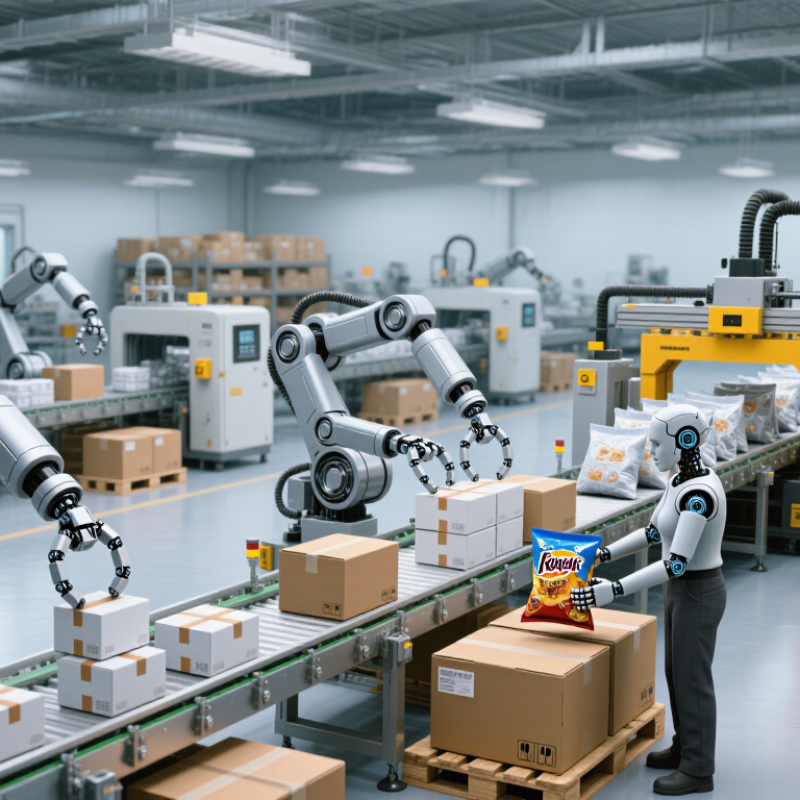
2026 Top Robotic Packing Machine Types for Global Buyers

2023 IFR Data: 541,000 Industrial Robots Installed Worldwide

2026 Top Robotic Packing Machine Types for Global Buyers

The 2023 IFR data deserves close attention: 541,302 industrial robots were installed worldwide. The International Federation of Robotics reported this figure in World Robotics 2024. It shows that automation is no longer limited to automotive plants. Food, logistics, pharmaceuticals, and consumer goods now demand faster packing cycles.

For global buyers, common options include delta robots for lightweight picking, articulated robots for flexible case packing, and palletizing robots for heavy loads. Collaborative robots can support smaller production lines, but their speed may not match traditional systems. PMMI industry reports also highlight labor shortages, changeover time, and end-of-line efficiency as major investment drivers. However, one mistake remains common: selecting a robot before testing the actual package, product weight, and line layout.

Tips: Ask suppliers for a live trial using your real cartons. Measure cycle time, rejection rate, cleaning time, and operator training needs. Check local electrical standards and service coverage before purchase. A lower price can become expensive when spare parts arrive slowly. Also, do not trust a perfect demonstration. Dust, soft bags, unstable cartons, and seasonal product changes can expose weaknesses quickly. I would leave capacity headroom, but not overbuild the line without evidence.
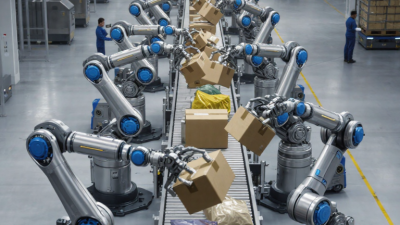
Robotic Packing Machine Types: Delta, SCARA, Six-Axis, and Cartesian

Robotic Packing Machine Types: Delta, SCARA, Six-Axis, and Cartesian

Delta robots suit high-speed picking of light products, such as pouches, trays, and cartons. Their overhead design keeps the packing area open and easy to inspect. They perform best when products arrive in predictable positions. SCARA robots offer fast horizontal movement with strong repeatability. They work well for case packing, small cartons, and simple loading tasks. However, both types can struggle with irregular items or changing product orientations.

Six-axis robots provide flexible movement around complex packages and tight spaces. They can rotate products, reach around obstacles, and handle layered packing patterns. This flexibility usually requires more programming and careful safety planning. Cartesian robots use linear axes and deliver clear, controlled motion. They are practical for large cartons, palletizing, and long packing distances. Their structure is easy to understand, but the frame can occupy valuable floor space. I have seen buyers focus on speed and underestimate maintenance access. That mistake becomes expensive.

Tips: Match the robot to product weight, dimensions, speed, and orientation changes. Test real samples, not only digital models. Measure reach during actual conveyor movement. Leave space for cleaning and tool replacement. A slower robot may deliver better uptime. Review cycle-time data with an integrator, then question the assumptions.

2026 Top Robotic Packing Machine Types for Global Buyers

Robotic Packing Machine Types: Delta, SCARA, Six-Axis, and Cartesian

Robot Type Typical Payload Range Typical Reach or Working Envelope Typical Packing Speed Motion and Configuration Best-Fit Packing Applications Main Advantages Key Limitations
Delta Robot Approximately 0.5–15 kg Approximately 400–1,600 mm working diameter, depending on model and tooling Commonly 60–200 picks per minute under suitable product, vision, and conveyor conditions Parallel-link mechanism with high-speed X-Y-Z movement; usually installed above the conveyor Primary packaging, pouch loading, food sorting, confectionery, lightweight cartons, and pick-and-place packing Very high throughput, low moving mass, accurate product handling, and efficient use of floor space Limited payload and orientation flexibility; overhead mounting and carefully controlled product flow are normally required
SCARA Robot Approximately 1–20 kg Approximately 400–1,000 mm horizontal reach Commonly 30–80 picks per minute, depending on payload, travel distance, and cycle requirements Selective-compliance arm with rotary joints and vertical Z-axis motion; optimized for planar handling Carton loading, case packing, tray loading, bottle handling, labeling support, and secondary packaging Fast horizontal movement, repeatable placement, compact footprint, and relatively straightforward programming Restricted orientation range compared with six-axis robots; less suitable for complex approach angles or irregular workspaces
Six-Axis Robot Approximately 3–20 kg for common packing models; higher capacities are available for heavy case handling Approximately 600–2,600 mm reach, depending on payload and arm size Commonly 10–40 picks per minute for packing tasks; speed varies considerably with payload and path complexity Six independently controlled axes provide full three-dimensional positioning and tool orientation Case packing, palletizing, depalletizing, bag handling, irregular product placement, and multi-orientation packing Maximum flexibility, wide working envelope, complex orientation control, and compatibility with many end-of-arm tools Higher purchase and integration cost, more demanding programming, and generally lower peak speed than delta systems
Cartesian Robot Approximately 5–100 kg or more, based on frame design and axis configuration Custom rectangular X-Y-Z envelope; travel can extend from several hundred millimeters to several meters Commonly 10–60 picks per minute, with high variation according to travel distance and load Linear axes move independently along straight paths; one or more rotary axes may be added when required Heavy case packing, palletizing, layer forming, large-format packaging, and applications requiring long linear travel Scalable structure, high rigidity, large payload potential, predictable motion, and efficient use of overhead or gantry space Larger installation footprint, less flexibility for angled approaches, and possible need for additional rotary axes or tooling
Buyer’s Note: The figures above are indicative engineering ranges rather than guaranteed machine specifications. Actual throughput depends on product dimensions, product stability, end-of-arm tooling, conveyor layout, vision requirements, payload distribution, safety design, and the required packing pattern.

Primary, Secondary, and Tertiary Packing Applications by Package Format

Robotic packing in 2026 is separating into three practical layers: primary, secondary, and tertiary applications. IFR reported 541,302 industrial robots were installed worldwide in 2023. That figure signals strong automation momentum, but it does not guarantee a successful packing project. Format, speed, hygiene, and product fragility still determine the correct machine type.

Primary packing handles the product-facing package. Delta robots suit high-speed pouch, tray, bottle, and flow-wrap placement. Vision systems can check orientation before loading. Collaborative robots may support slower, flexible lines with frequent product changes. PMMI’s 2024 State of the Industry report valued U.S. packaging machinery shipments at approximately 10.2 billion dollars in 2023. The market is large. Requirements remain highly specific.

Secondary packing groups finished units into cartons, cases, or bundles. Robotic case packers manage mixed patterns, while cartoning systems handle cartons and retail-ready formats.

Tertiary packing prepares stable loads for storage and transport. Robotic palletizers stack cases, bags, or trays, then integrate with wrapping equipment. The format changes everything: a rigid case tolerates compression, but a soft pouch may collapse under the same force. Smithers’ packaging outlook continues to identify logistics efficiency and automation as major market drivers. Yet the boundary between applications is not always clean. Some lines need manual intervention, especially during changeovers or irregular product runs. That limitation deserves honest planning.

Performance Metrics: Throughput, Payload, Cycle Time, and OEE

2026 Top Robotic Packing Machine Types for Global Buyers

Performance begins with the product, not the robot. Delta pick-and-place systems suit lightweight pouches and trays, while articulated robots handle cartons, cases, and mixed loads. Payload must include grippers, tooling, and product variation. A five-kilogram product may require an eight-kilogram robot rating. That margin is often forgotten.

Throughput shows output per hour, but cycle time reveals machine behavior. A 30-cycle-per-minute system may produce 1,800 picks hourly under perfect conditions. Feeding gaps, film changes, and rejected packs reduce real output. The International Federation of Robotics reported 541,302 industrial robot installations in 2023, showing strong automation demand, but installation volume does not guarantee packing efficiency. OEE combines availability, performance, and quality. An 85% result is widely used as a world-class reference by the OEE Foundation. Many new lines never reach it consistently.

Tips: Measure output during a full shift, not a factory demonstration. Record minor stops. Check payload at the gripper, not only at the robot arm. Ask suppliers for cycle-time data using your actual product dimensions. Also test changeover time. A fast machine with a slow format change can disappoint. I have seen theoretical throughput look excellent, then fall sharply after uneven product feeding. That gap deserves honest review. Use independent acceptance tests and keep three months of production data before adjusting the OEE target.

2026 Buyer Criteria: Vision Systems, Food Safety, Flexibility, and ROI

Global buyers evaluating robotic packing machines in 2026 should examine vision systems beyond camera resolution. A reliable system detects damaged cartons, missing products, and incorrect orientation. It should also record inspection results for traceability. In factory trials, lighting changes often caused more errors than hardware limits. Ask suppliers to test clear film, reflective packaging, dust, and low-contrast labels.

Food safety requires practical design choices. Select stainless steel contact areas, sealed components, and hygienic cable routing. Smooth surfaces reduce residue during washdown. Tool-free access can shorten cleaning time. However, easier cleaning does not guarantee safe operation. Operators still need documented procedures, training, and verification checks. Flexible machines should handle different pack sizes without complicated adjustments. Servo-driven movements, adjustable grippers, and recipe-based controls support faster changeovers. Keep the interface simple. A tired operator should understand it quickly.

ROI depends on real production conditions, not optimistic sales models. Calculate labor savings, reduced damage, uptime, maintenance, energy use, and training costs. Include lost output during installation. A machine may look efficient while waiting for materials or manual quality approval. Request performance data from comparable applications, then run a site acceptance test with your packaging. Perfect forecasts are impossible. That is worth admitting. Buyers should also inspect spare-part availability, remote support, cybersecurity controls, and operator safety functions. A cheaper machine can become expensive when small failures stop a full line. Examine the weak points before signing.

Go to Top